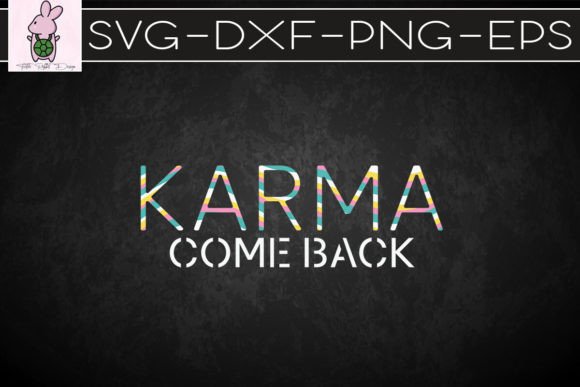
Karma Come Back SVG
As a designer who’s stitched over 300 client projects—from boutique baby onesies to Etsy best-selling tote bags—I opened Karma Come Back SVG expecting something bold, maybe even cheeky. What I found was quieter than anticipated: clean, centered, and intentionally uncluttered. The phrase sits in a gentle, slightly rounded sans-serif with subtle spacing that breathes—no swirls, no ornate drop shadows, no forced whimsy. It feels grounded. Not preachy, not flippant—just quietly confident. That tone is exactly why it works so well for real embroidery use, especially when you’re stitching for someone else’s brand or gifting intention.
First Stitch, First Impression: Where This Design Naturally Lives
I tested Karma Come Back SVG on a natural linen tea towel first—medium-weight, lightly textured, no stretch. Hooped with medium tear-away stabilizer, stitched in matte cotton thread (charcoal gray on oat), and the result landed beautifully: legible at 3.5 inches wide, crisp edges, no feathering. That’s the sweet spot. This isn’t a design screaming for a baseball cap or a toddler’s onesie chest placement. It’s better suited for products where calm intention matters: a minimalist apron for a small-batch baker, a pillow cover for a wellness studio, or the back yoke of a relaxed-fit sweatshirt sold at a local craft fair.
It also shines as a finished embroidered patch—especially when fused onto denim jackets or canvas totes. The clean letterforms hold up well in satin stitch borders, and the open spacing between letters prevents fill-stitch bleed on denser fabrics. No hidden outlines or overlapping layers complicate digitizing; what you see in the SVG is what translates cleanly into an embroidery file.
Where It Performs—and Where It Asks for Care
Karma Come Back SVG excels in custom apparel and handmade product contexts where clarity and quiet confidence sell: think personalized gifts for graduates (“karma comes back” stitched inside a graduation cap box), wedding guest favors (embroidered on muslin pouches), or nursery decor (tiny version on a swaddle blanket corner). Its cup-sized proportions mean it scales down reliably—even at 2.25 inches, the letterforms remain distinct without collapsing.
But here’s where attention matters: avoid placing it on highly textured fabrics like bouclé or thick terry cloth without extra stabilizer support. On stretchy knits (think lightweight sweatshirts or ribbed tees), test stitch density first—tight fill areas could pucker if the design hasn’t been optimized for elasticity. And while the PNG files have clear backgrounds (great for mockups), remember that embroidery doesn’t “see” transparency—it reads vector paths. So if you’re converting Karma Come Back SVG for machine use, double-check how curves and terminals digitize: some software auto-rounds sharp corners, which may soften the design’s grounded feel.
Dark fabric? Yes—but pair it with high-contrast thread (cream, soft white, or even heathered gray) rather than black-on-black. Tiny lettering isn’t an issue here—the design avoids fine serifs or ultra-thin strokes, so readability stays strong across hoop sizes. Still, if you’re using a 4-inch hoop or smaller, confirm the final stitched width fits comfortably within your machine’s safe zone before committing to production.
What This Design Says About Your Craft Business
For Etsy sellers and small shop owners, Karma Come Back SVG adds subtle sophistication without sacrificing approachability. It doesn’t shout—it invites reflection. That makes it ideal for brands rooted in mindfulness, slow living, or intentional gifting. Customers notice when embroidery feels considered, not copied. A well-executed Karma Come Back SVG on a handmade kitchen towel tells buyers you care about message *and* medium—not just slapping text on fabric.
It also supports brand consistency. Unlike trend-driven graphics that date quickly, this design holds up across seasons and product categories. Use it once on a holiday gift set, again on a summer market apron, and later on a digital product bundle—it reads as part of a cohesive visual language, not a one-off.
Practical Designer Notes Before You Stitch
- Always test on scrap fabric—especially if pairing with new thread colors or stabilizers.
- Check contrast early: view your mockup in both light and dark backgrounds. Does the phrase still land with weight—or disappear?
- Review stitch density in your embroidery software. If fill areas look overly dense, reduce density by 5–10% for breathable fabrics like cotton poplin or lightweight linen.
- Confirm licensing terms before selling finished items or bundling Karma Come Back SVG into digital kits—this is critical for craft business compliance.
- Use proper stabilizer: medium cutaway for knits, medium tear-away for stable wovens, and optional topping (like water-soluble film) for napped fabrics like fleece or terry.
- Compare black-and-white mockups—they reveal balance and rhythm faster than color versions.
- Ask yourself: does this serve the product—or distract from it? On a busy tote bag print, Karma Come Back SVG might get lost. On a solid-color apron? It becomes the quiet anchor.
Final Thought: A Design That Earns Its Place
Karma Come Back SVG isn’t flashy. It won’t dominate a social media feed with motion or glitter. But in the hands of a thoughtful designer or craft business owner, it earns its place—one precise stitch at a time. It works because it respects the fabric, the machine, and the person receiving the finished product. Whether you’re embroidering a baby onesie with quiet hope or branding a small-batch soap line with grounded warmth, this design doesn’t compete for attention—it holds space for meaning. And in today’s handmade landscape, that kind of intention is rare, valuable, and deeply stitchable.